Hydrogen blog:
Trends, technology, backgrounds

The colors of the hydrogen traffic light: An overview of the different types of hydrogen

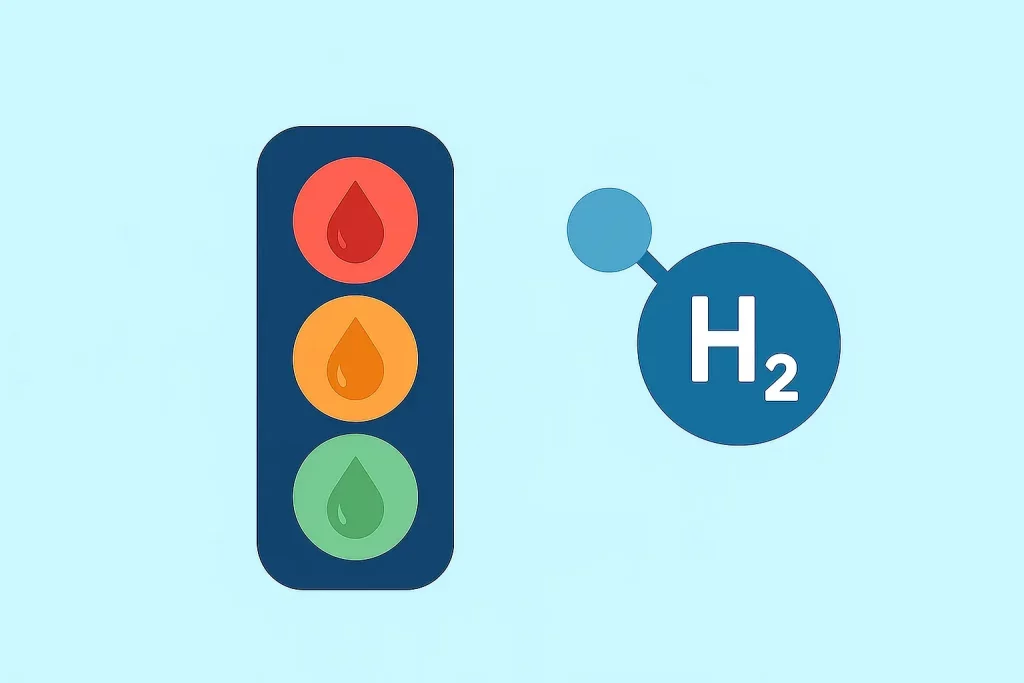
In addition to the colors green, yellow and red, the hydrogen traffic light also includes grey, orange and turquoise, each of which identifies specific production processes and the environmental impact of hydrogen. This expanded color palette helps to better understand and evaluate the diversity of hydrogen production technologies and their environmental implications.

Green hydrogen

Green hydrogen is produced by electrolyzing water using electricity from renewable energy sources such as wind, solar or hydropower. This process is virtually emission-free, as no fossil fuels are used and the carbon footprint is therefore very low. Green hydrogen is considered the most sustainable and environmentally friendly form of hydrogen and plays a central role in the energy transition and the decarbonization of various sectors such as industry, transport and power generation.

Yellow (blue) hydrogen

Blue hydrogen is produced by converting natural gas into hydrogen and CO₂, with the CO₂ being stored in underground reservoirs (carbon capture and storage, CCS). This method significantly reduces CO₂ emissions compared to conventional natural gas use, but is not completely emission-free. Blue hydrogen represents a bridging technology that can help facilitate the transition to a CO₂-neutral economy while the infrastructure for green hydrogen is not yet fully developed.

Red hydrogen

Red hydrogen is produced using conventional methods such as steam reforming of natural gas or coal, without the use of carbon capture and storage (CCS). This type of hydrogen production is currently the most commonly used, but has the disadvantage that it causes significant amounts of CO₂ emissions. Red hydrogen is therefore classified as the least environmentally friendly option and is at odds with the goals of climate neutrality.

Gray hydrogen

Grey hydrogen is also produced by steam reforming natural gas, but without any CO₂ capture or storage. This process is very CO₂-intensive and, like red hydrogen, causes high greenhouse gas emissions. Grey hydrogen is currently the cheapest, but also the most environmentally damaging method of hydrogen production and will therefore have to be replaced by greener alternatives in the long term.

Orange hydrogen

Orange hydrogen is produced by thermochemical processes such as the gasification of biomass. This method uses organic materials and can be considered CO₂-neutral if the biomass is grown and harvested sustainably. Orange hydrogen is an interesting option as it uses renewable resources while contributing to the circular economy.

Turquoise hydrogen

Turquoise hydrogen is produced by the pyrolysis of methane, producing solid carbon as a by-product. This process produces no direct CO₂ emissions and can be an attractive alternative to steam reforming, especially if the resulting carbon can be used for industrial applications. Turquoise hydrogen combines advantages of natural gas utilization with a lower carbon footprint, offering a bridge solution on the way to fully renewable energy sources. The hydrogen traffic light provides clear guidance for industry, politicians and consumers to make informed decisions about the use of hydrogen. It promotes the expansion of renewable energies and the development of clean technologies by prioritizing green hydrogen projects and increasing transparency in the market. With the increasing availability of green hydrogen, it is expected that the importance of gray, red and even yellow hydrogen will decrease and the transition to a sustainable energy economy will be accelerated.
blank
Technology & Applications
blank

Hydrogen storage and transportation

Regulation & sustainability
blank

The colors of the hydrogen traffic light: An overview of the different types of hydrogen

Regulation & sustainability
blank

The German government’s national hydrogen strategy

*Mandatory field | This contact form is protected by reCAPTCHA: Privacy Policy & Terms of use
We would like to ask you to enter your postal code (optional) so that we can process your request in a targeted manner.
*Mandatory field | This contact form is protected by reCAPTCHA: Privacy Policy & Terms of use

Contact us

We are here for you. Give us a call, fill out the form or send us an e-mail. We will get back to you as soon as possible.

blank

Contact person

Mr. Jonas Nist
Head of Business Unit